Air Quality Management Commission Takes Action
On Wednesday, the Commission for Air Quality Management announced the removal of Stage 3 restrictions in the Delhi-National Capital Territory Region, attributing this decision to a noticeable improvement in air quality.
According to the commission’s report, the Air Quality Index (AQI) in Delhi was recorded at 327, categorizing it as ‘very poor.’ Stage 3 restrictions had been implemented on November 11 when the air quality had deteriorated to a ‘severe’ level.
With the lifting of these restrictions, the 50% work-from-home policy for offices and hybrid classes in schools will no longer be in effect, as stated by Delhi’s Environment Minister.
Nonetheless, the initial two stages of the Graded Response Action Plan (GRAP) remain active.
The second stage of GRAP, which is activated when the AQI exceeds 300, prohibits the use of coal and firewood, including tandoors in restaurants and open eateries. It also restricts the operation of diesel generators, except for essential services.
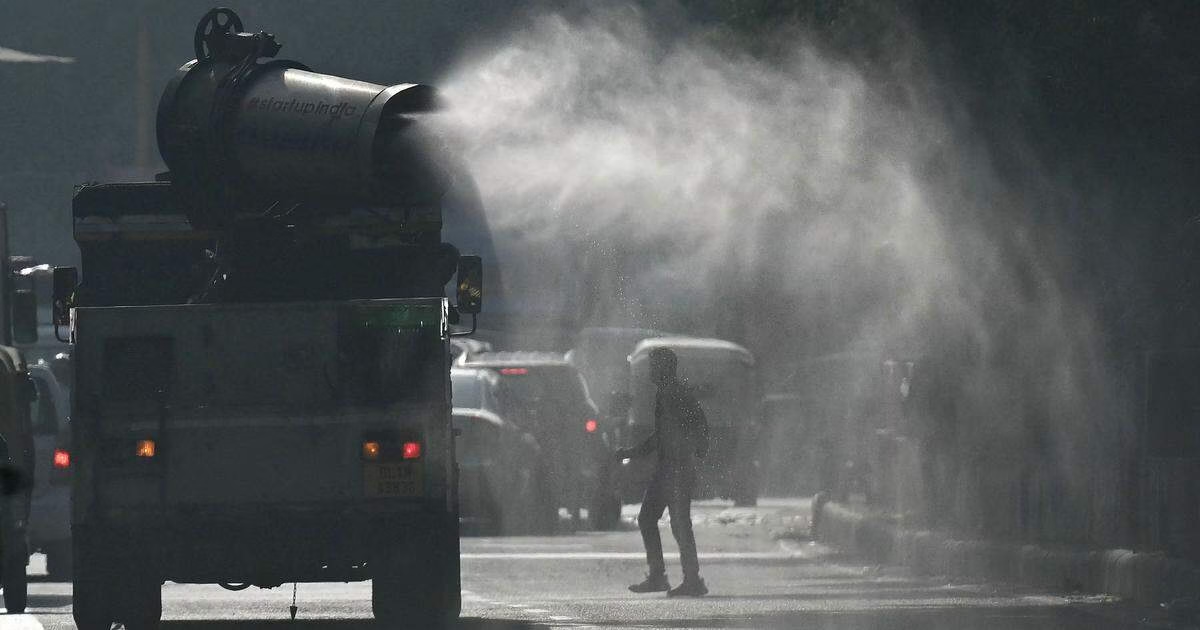
Additional measures include mechanical road sweeping and water sprinkling to minimize dust, along with heightened inspections to enforce dust control at construction sites.
Stage 2 restrictions also encompass measures from the first stage, which was enacted on October 14.
GRAP consists of a series of escalating anti-pollution strategies designed to avert further deterioration of air quality once it surpasses specific thresholds in Delhi and its neighboring areas.
As of Wednesday evening, air quality readings in the National Capital Region remained in the ‘very poor’ category, according to the Sameer application, which provides real-time updates from the Central Pollution Control Board.
Noida recorded an AQI of 348, Greater Noida at 324, and Ghaziabad at 334.
In Haryana, Gurugram reported an AQI of 272, categorizing it as ‘poor,’ while Faridabad logged 208.
Air quality in Delhi typically worsens during the winter months, often ranking it as the world’s most polluted capital.
Factors contributing to this decline include stubble burning in Punjab and Haryana, firecracker usage during Diwali, vehicular emissions, lower temperatures, reduced wind speeds, and pollution from industries and coal-fired power plants.