Strengthening Bilateral Ties through Energy Cooperation
Amid positive developments in trade negotiations between India and the United States, both nations have established a new agreement in the energy sector, paving the way for more collaborative and smooth bilateral relations. Union Minister for Petroleum and Natural Gas, Hardeep Singh Puri, announced that Indian public sector oil companies have signed a long-term contract for the import of liquefied petroleum gas (LPG) from the USA for the first time. He described this agreement as a “historic initiative” for India’s LPG market. Under this deal, Indian Oil, Bharat Petroleum, and Hindustan Petroleum will collectively import approximately 2.2 million tons per annum (MTPA) of LPG from the Gulf Coast of the USA, which constitutes about 10% of India’s annual LPG imports. The pricing is based on the Mount Bellevue benchmark, recognized as a key determinant of global LPG prices.
Commitment to Affordable LPG for Beneficiaries
The minister revealed that teams from state-owned oil companies had visited the USA in recent months to negotiate with major producers. He also emphasized the government’s commitment to providing affordable LPG to beneficiaries of the Ujjwala scheme. Notably, despite a 60% increase in global prices last year, the Modi government managed to keep consumer prices between ₹500 and ₹550 per cylinder, absorbing a burden of over ₹40,000 crores.
Strategic Importance of the Long-Term LPG Agreement
The long-term LPG import agreement with the USA is not merely a commercial transaction; It marks a significant strategic milestone in India’s complex journey towards energy security. India is among the fastest-growing LPG-consuming nations, and ensuring a stable and affordable energy supply for millions of beneficiaries under the Ujjwala scheme is a priority for any government. The timing of this diversification of LPG sources is crucial, especially as global prices face uncertainty. Despite a 60% rise last year, India has shouldered the burden of heavy subsidies to protect domestic consumers from inflation. Thus, the new agreement for 2.2 MTPA from the USA could play a vital role in making the supply chain more secure, diverse, and competitive.
Geopolitical Context and Challenges Ahead
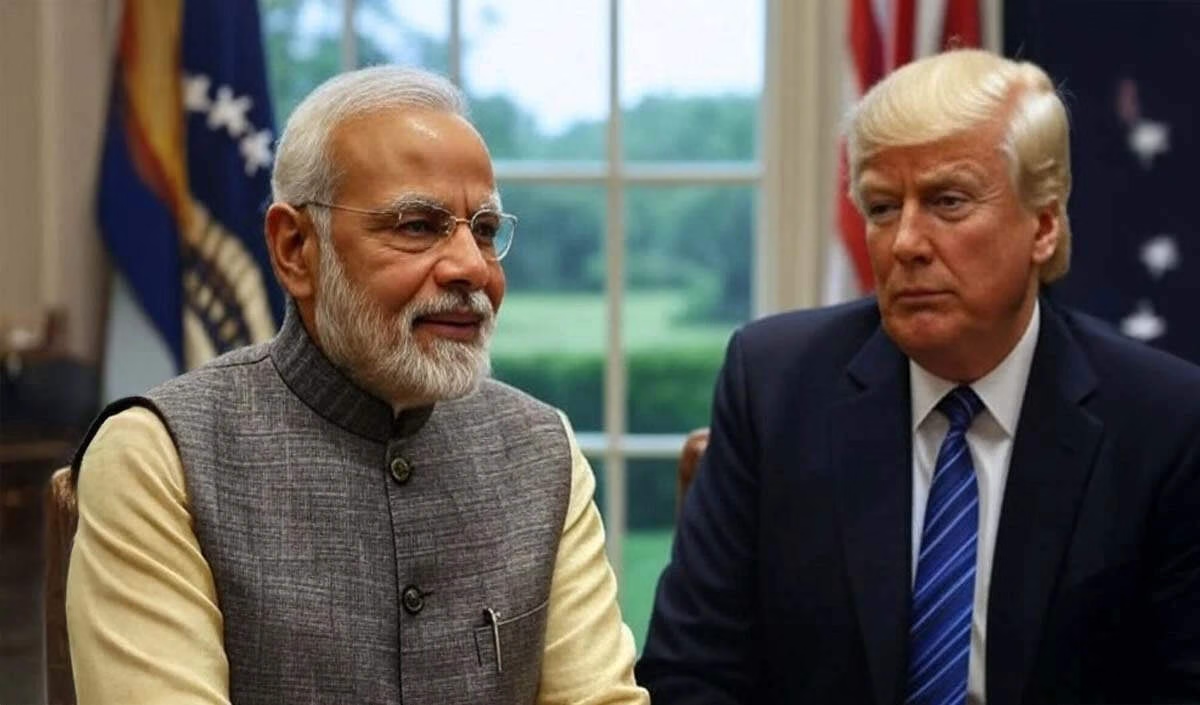
The agreement between India and the USA also holds strategic significance. Energy is a sector where economic interests are deeply intertwined with geopolitical dynamics. The escalating tensions between the USA and Russia are impacting the global energy landscape. Warnings from President Donald Trump about imposing “very strict sanctions” on countries trading with Russia pose a significant challenge for India, especially as it has been able to manage its energy costs by purchasing crude oil from Russia at discounted rates. The imposition of tariffs by the Trump administration, which could reach up to 50%, along with an additional 25% on Russian oil purchases, indicates that energy diplomacy is likely to become even more complex in the coming months. If the proposed “Russia Sanctions Act 2025” is enacted, it could have profound implications for Indian oil companies.
Understanding the Broader Energy Strategy
In this context, understanding the American LPG agreement is essential. It signals three key aspects of India’s energy strategy. First, India is determined to limit its dependence on any single region or country. Second, it is opening new avenues for energy cooperation with the USA, ensuring that supply disruptions do not occur even in times of high political tension. Third, it reinforces India’s policy of “strategic autonomy,” allowing it to engage with various powers according to its interests without being part of any military or economic bloc.
Navigating Complex Energy Diplomacy
Indeed, balancing energy interests is becoming increasingly challenging for India. On one hand, there is the USA’s growing restrictive stance, and on the other, the allure of affordable energy from Russia, creating a complex balancing act for India’s energy diplomacy. However, India’s economic needs, development goals, and social welfare programs necessitate that energy security be pursued through a multi-source, multi-directional, and flexible strategy.
A Step Towards Energy Resilience
The new LPG import agreement with the USA is part of this broader strategy, representing a step that could safeguard India against uncertainties in the energy market in the coming years. It presents both an opportunity and a challenge. The opportunity lies in ensuring price stability and supply security for India; the challenge is that amid shifting global power dynamics, India must adopt a more balanced, prudent, and forward-looking energy diplomacy.
Conclusion: A Shift in Energy Security Perspective
Ultimately, this agreement demonstrates that India is no longer viewing energy security solely through the lens of imports and exports but is advancing it as part of a long-term global strategy. This move will strengthen India’s strategic autonomy, energy resilience, and economic stability in the years to come.